The ambitious vision of urban regeneration – revitalising communities, creating affordable housing, and building sustainable futures – is facing a significant headwind: a challenging economic climate.
S&P Global UK Construction PMI produced a report last week showing UK construction activity falling at its sharpest rate since the Covid-19 pandemic. Higher financing costs, soaring inflation, and persistent supply chain disruptions are casting a long shadow over projects across the UK and are threatening to derail progress.
The Perfect Storm for Developers:
UK developers are caught in a perfect storm. Higher interest rates make borrowing significantly more expensive, increasing the financial burden of already complex projects. Inflation simultaneously drives up the cost of materials, labour, and land, squeezing profit margins and making projects less attractive to investors.
This double whammy isn’t just about reduced profitability; it’s about viability. Projects that were once considered sound investments are increasingly becoming unfeasible, leading to delays, budget overruns, or even outright cancellations. The ripple effect of supply chain disruptions further complicates matters, causing delays and uncertainty in material availability, adding yet another layer of complexity and cost.
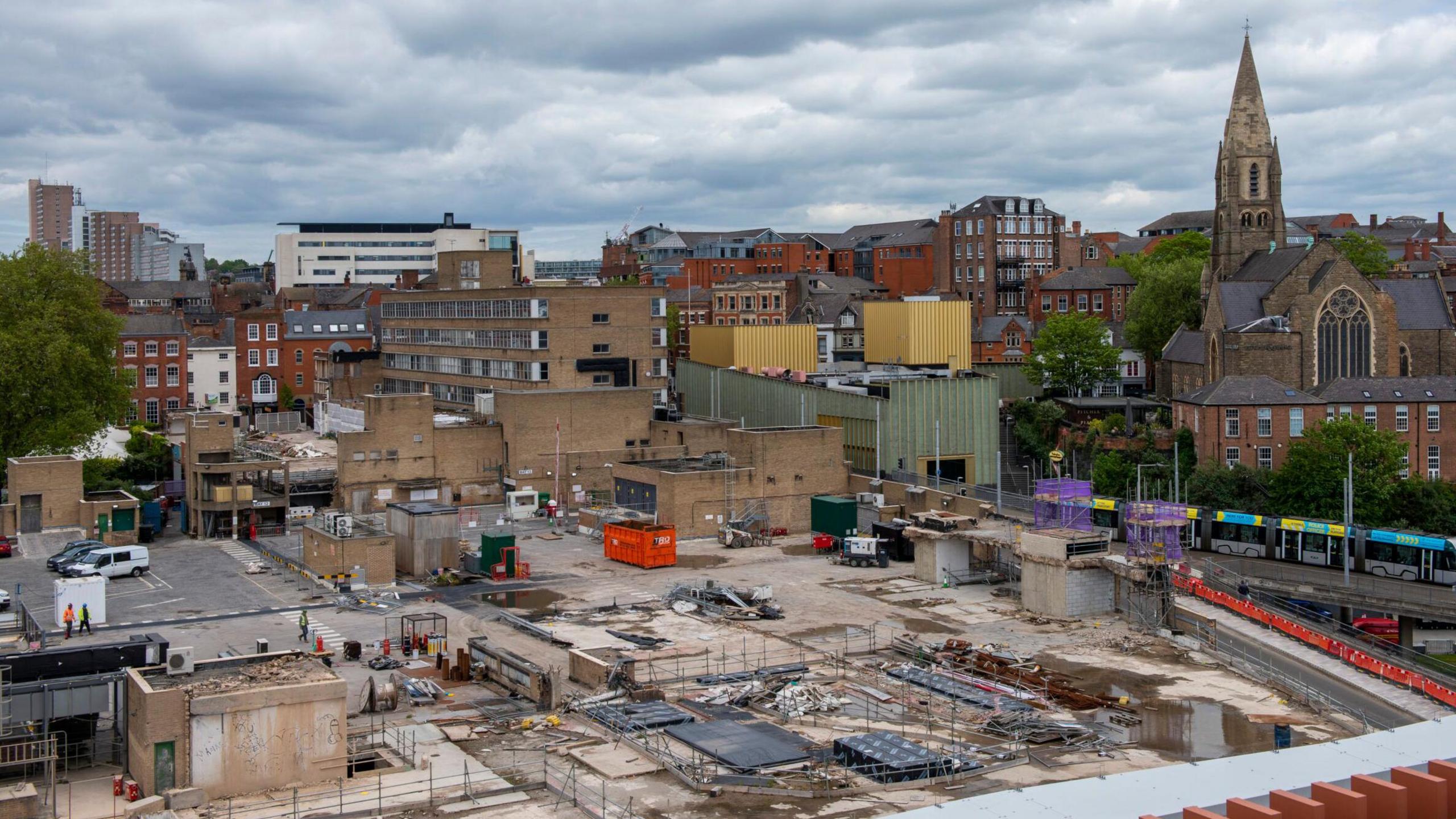
An example of stalled regeneration; The Broad Marsh site in Nottingham. Plagued by micro and local issues causing delay, and without significant Government intervention is likely to be compounded by the wider macro economic headwinds. Homes England stepped in earlier this year and acquired the site from Nottingham City Council.
The Community Impact: A Broken Promise?
The consequences extend far beyond the balance sheets of developers and investors. The communities these projects aim to serve are at risk of bearing the brunt of this imbalance. The most immediate and concerning impact is on affordable housing. Increased development costs can translate into higher asking prices, potentially pricing vulnerable communities out of the very homes these regeneration projects were intended to provide. The dream of affordable, quality housing risks becoming a broken promise.
Furthermore, the pressure to control costs may lead to compromises on design quality. Cutting corners on quality, particular material quality can result in less durable, and less sustainable buildings. It can compromise long-term value and potentially impact the health and well-being of residents. The vision of vibrant, sustainable communities could be replaced by a patchwork of hastily constructed, less desirable spaces.
Delays and cancellations are equally devastating. Communities eagerly anticipating improved infrastructure, new amenities, and revitalised public spaces find themselves left waiting, potentially exacerbating existing social and economic inequalities. The longer the wait, the greater the risk that the momentum for positive change is lost.
Navigating the Challenges: A Call for Collaboration:
The challenges are significant, but not insurmountable. Addressing this crisis requires a collaborative effort between governments, developers, investors, and communities. Government intervention, in the form of public sector grants / loans, tax incentives, and embracing private sector partnerships, is crucial to supporting the viability of affordable housing projects and ensuring that regeneration efforts aren’t stifled by economic headwinds.
It is hard to see whether sustainable design and construction methods will be prioritised in the short-term given the immediate challenges, and therefore it is imperative on those working in the industry to demonstrate the long-term benefits to investors and how this impacts their wallet.
On the planning front, the industry is waiting with baited breathe on the Planning and Infrastructure Bill, with the Government announcing that it intends to “streamline planning and consenting processes, modernise planning committees… and enhance the performance of local planning authorities”. We have all heard this one before, however the wider financial challenges places renewed focus on our governing system. The Government cannot afford to get this one wrong.
Finally, maintaining robust community engagement is paramount, ensuring that the voices of those most affected are heard and that projects remain responsive to their needs.
The Future of Regeneration:
The current economic climate presents a significant test for urban regeneration. However, by proactively addressing the challenges and fostering collaboration, we can ensure that these vital projects continue to deliver on their promise of creating vibrant, sustainable, and equitable communities for all. The alternative – a retreat from ambitious regeneration plans – would be a significant setback, leaving communities vulnerable and hindering the creation of the thriving, inclusive places we all deserve.
Following the Autumn Statement last Wednesday, political commentators believe that signs are increasingly pointing towards a Spring 2024 General Election.
The latest opinion polls from Politico show that the UK Voting Intention for the Labour Party is at 44%, consistently polling ahead of the Conservative & Unionist Party at 24%.
A key question being asked by those in the industry is what a potential Labour Government means for UK housing. The Leader of the Labour Party, Sir Kier Starmer, has signalled his intention to reintroduce the national housing targets, something which the current Levelling Up Secretary, Michael Gove, stated was always “optional”. Having consistently failed to meet the 300,000 home per annum target for England (a revised target set by the Government in November 2017), it’s perhaps not a surprise the current Government has changed its tone.
Starmer has placed significant importance on house building, with the first of his five pledges being “Get Britain building again”. It shows housebuilding being a core part of Labour’s plan. As announced at the party conference, Labour has committed to building 1.5 million new homes by the end of their first term, reforming the planning system, boosting affordable housing, delivering the next generation of new towns, delivering a package of devolution to Mayors, with stronger powers over planning and control over housing investment, fast-tracking high density on urban brownfield land, and supporting first-time buyers.
What is lacking is detail around each of these commitments, the ‘how’. There are some snippets of how Labour proposes to deliver on these commitments, principally in three key areas:
1. Work with Councils to draw up and agree Local Plans which has stalled and supporting this by recruiting hundreds of extra planners.
2. Strengthen requirements to approve new homes in areas that do not have up-to-date Local Plans, intervening to approve new homes in poorly performing areas, (including using call-in powers in the most extreme cases).
3. Boost affordable housing Reform S106 Agreements (planning charges) with added flexibility in the Affordable Homes Programme.
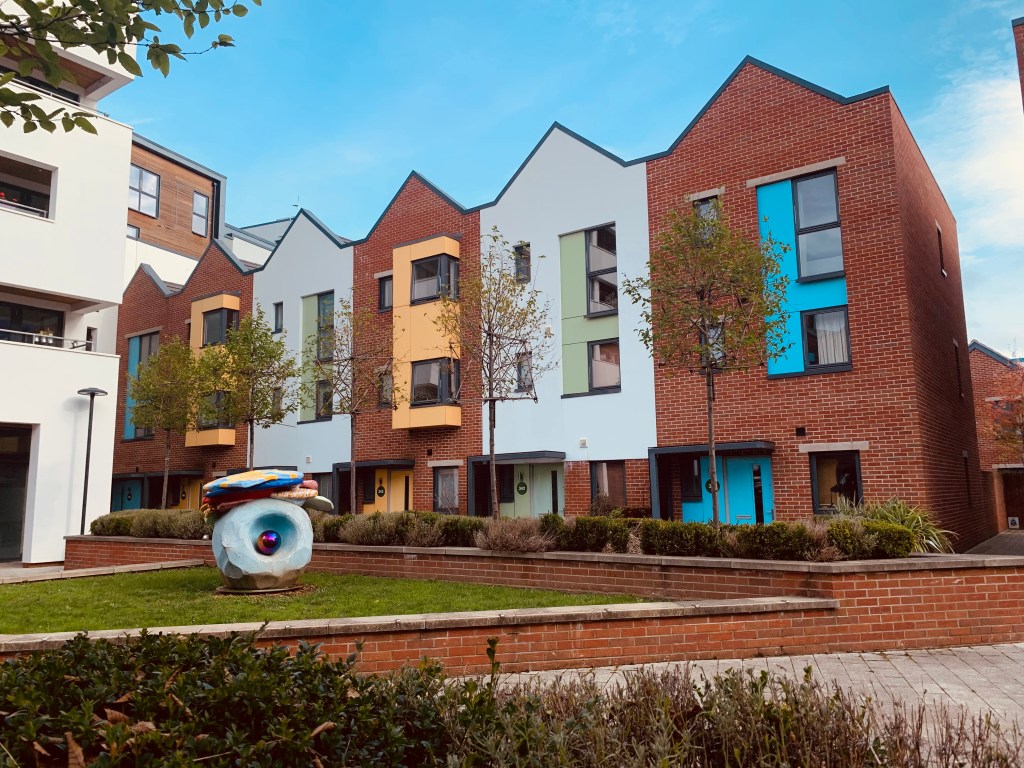
Paintworks Phase 3 in Bristol, a scheme I visited early this year which achieved practical completion in 2018. An inspiring place to visit, a former Victorian paint and varnish factory running along the River Avon. A mixed use scheme and from a design perspective extraordinary. The down side? Very low affordable housing at 5%… a story of the last 13 years of the UK housebuilding.
A key theme running through the first and second point ultimately comes back to properly resourcing the planning system. Recruiting planners to the industry and properly investing in the profession is fundamental. We can be as radical with planning reform as we want, but if we do not value the people working within it and give them the resource required, then change cannot come about.
On the second point, there is still a “get out of jail” statement using call-in powers in the most extreme cases. In terms of intervening to approve new homes in poorly performing areas, it feels like this could be linked back to the planning reform point. It could, however, mean following the trend which the current Government is on in threatening to designate certain Local Authorities as underperforming, which passes planning authority powers over to the Planning Inspectorate.
On the third point, it feels somewhat unrealistic to assume that S106 reforms alone can solve the affordable housing crisis. There is nothing in this that talks about funding local authorities, bringing in rent controls, funding the existing housing stock, or reimagining the current affordable housing programs. Yes, planning charges should be looked at as part of a wider suite of measures, but this shouldn’t be done in isolation.
In short, there isn’t enough to dig into the detail at this stage. The signals are good, but then again, aren’t they always?
A view from a few – the Low Traffic Neighbourhood debate rages on
As I walk through the streets of North London on a cool Sunday morning the air is still, the skies are blue and all feels calm. That is until I stumbled into an unassuming road traffic sign a couple of minutes’ walk from my flat. The original message informs road users that this particular road provides:
“No through route, expect [for] cycles”.
What should be a fairly unextraordinary, yet informative sign has since attracted several amendments, contributed to by my neighbours. It has morphed into what I can only describe as a real-life aggressive twitter post, which makes sense when seen online but appears somewhat alien situated in this leafy suburb.
The first statement in black marker pen, situated directly above the highways approved message shouts:
“DIVIDING THE COMMUNITY”
This has then been struck through by another eager contributor replacing “DIVIDING” with “UNITING” (not quite sure the second contributor realised the irony of this word, but let’s leave it for now).
Further messages then encouraged by the animated sign includes:
“Prioritising white cyclists over the needs of the elderly, the infirm and minorities” followed by,
“Grow up” and,
“ooh angry white cyclist!”.
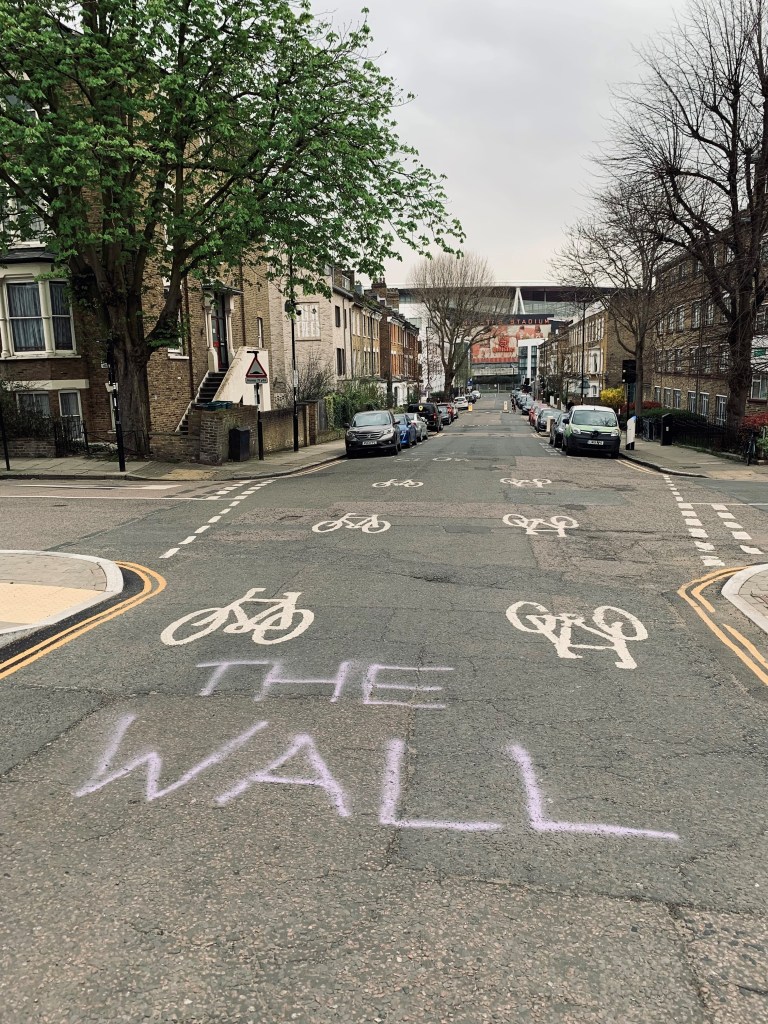
Only a short 2 minute walk away an another active member of my community has spray painted “THE WALL” onto the tarmac right in sight of the newly constructed traffic enforcement camera which I must confess has a feel of the Sauron Watchtower about it (apologies to those of you that are not Lord of The Rings fans).
Going beyond The Wall – you know nothing Jon Snow
So, what explains this local reaction? Well you may have heard the acronym LTN (Low Traffic Neighbourhood) being discussed in raised voices over the last year in many communities throughout England. These conversations follow the implementation of a series of traffic reducing measure (referred to as LTNs) introduced by local authorities throughout England and are a result of a £250m ‘active travel fund’, which was pushed through by Government in response to the Covid pandemic in May of last year[1]. 10 combined authorities and 68 local authorities from Cornwall up to the North East have since benefited from the scheme.
The first tranche of a longer-term £2bn investment plan, the LTN movement seeks to reduce air pollution by limiting motor vehicles usage in certain areas by adopting measures such as bollards, planters or even traffic cameras to stop rat running and minimise traffic on the roads. In theory it aims to reduce air pollution and encourage cycling, walking and other types of low carbon emitting transportation. Which sounds great! Right? I can already see in my own neighbourhood that the side roads are quieter and altogether feel much safer. So why the anger?
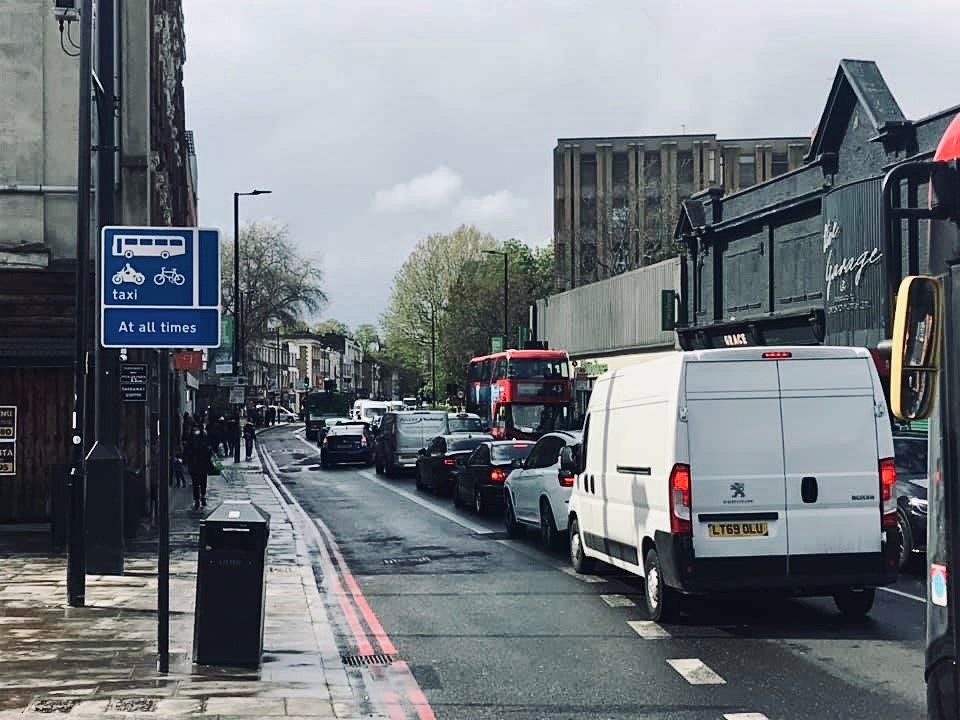
Well is doesn’t take much further investigation to see some of the immediate negative effects of the newly adopted LTN. As I walk onto the main arterial route running near my home (which incidentally holds the majority of our local shops in addition to a number of lower value residential homes) there is standstill traffic in both directions. I should at his point remind you that this is on a Sunday morning!
Standstill traffic in both directions (Highbury & Islington)
What this demonstrates is that LTNs implemented on their own will likely displace traffic, exactly what appears to be happening in my local area. However, studies show that if introduced as part of a wider transport strategy plan then over time there is a shift towards walking and cycling and subsequently a reduction in traffic[2]. So perhaps my local Council (Islington) have just poorly planned the LTN and not considered the wider transport strategy.
What supporters of LTNs would point to though (if introduced as part of a considered plan) are all the amazing benefits LTNs bring, including traffic reduction, public health and air quality improvements (including lowering mortality rates, particularly for the working classes and ethnic minority groups), a reduction in street crime and economic benefits from walking / cycling to name but a few[3].
An example of an LTN in Highbury Fields (Highbury & Islington), using planters as a road block
However, despite these benefits there are still those who strongly disagree.
A report by the Guardian in September of last year who interviewed Labour deputy leader of Lambeth Borough Council (Claire Holland) [4] refers to a “culture war – between those who want to drive wherever they want, whenever they want, at whatever speed they want – compared to the right of everybody else to get around peacefully and effectively”.
Some very divisive language there by Councillor Holland.
Yet residents in Lambeth point to a similar situation to my neighbours who receive the displaced traffic, and explain how they are now “in a cloud of pollution”, and that LTNs “are not representative of working classes, BME communities, of the disabled, of local businesses”.
In addition to the traffic displacement argument other common themes of those who oppose LTN’s include:
A lack of consultation (with many LTNs schemes introduced without proper notice or consultation as an emergency measure)
Disinformation being spread about the benefits of LTNs
People feeling cut off, particularly the vulnerable, and
The impact on businesses (for example taxi and delivery drivers have to take much longer route)
The toxicity of the debate has spilled over into protests throughout communities, with large demonstrations in Brixton[5], Oxford[6], Ealing[7] and Hackney[8]. It has also reached the courts, with the Mayor of London in June of this year overturning an original High Court decision at the Court of Appeal to block the Greater London Authorities Streetplace plans[9]. Hackney Councillor Jon Burke, who is a vocal advocate of LTNs, has even received a death threat, which is disgraceful to say the least.
The brilliant Today in Focus podcast managed to interview the very same Councillor Burke. He admitted that he “favours experimental traffic orders – because it allows for more meaningful engagement in the consultation process”.
Councillor Burke goes onto say that “when you undertake prior consultation noisy vocal groups of people who are opposed to change will, as we’ve experienced, engage in campaigns that border on the dissemination of misleading information to people”.
He explains that the experimental schemes allows “for everyone to have an opportunity locally to experience how a low traffic neighbourhood functions”.
And I see his argument to a degree, but when pressed by the interviewer about whether the LTN will be removed after the consultation period should the majority of respondents oppose the scheme, Councillor Burke says “Absolutely not. We will make the decision whether or not to retain LTNs based on a variety of factors of which public opinion is only one”.
Now I should say the interview goes on (click here to listen to the interview), and Councillor Burke makes some other really valid points in support of LTNs. However, the rhetoric before he reaches this point is very divisive. I would disagree with him and say that the concerns of local communities should be heard and admitting publicly that LTN’s will be introduced regardless of public consultation to me feels reckless.
I am genuinely supportive of LTNs, however I do feel those reasonable and considered people who are opposed to LTNs are not being heard. I understand that you won’t have the support of every local constituent and there will be those who will oppose the measures regardless. However, proper consultation would go a long way to properly address issues such a traffic displacement through bad transport planning, listening to those who are vulnerable, ensuring proper access for the disabled and to look to provide better support to business impacted by the introduction of LTNs.
What I fear is happening is that the LTN debate goes beyond a local transport issue. Perhaps, as Councillor Holland points out, it represents a wider culture war in our society.
Looking back at the road near my flat I wonder whether my neighbour who took the time to write “The Wall” message will take the same time and care to listen to the other side of the debate. In the meantime I’ve got my black marker pen ready to add my thoughts to the local message board.
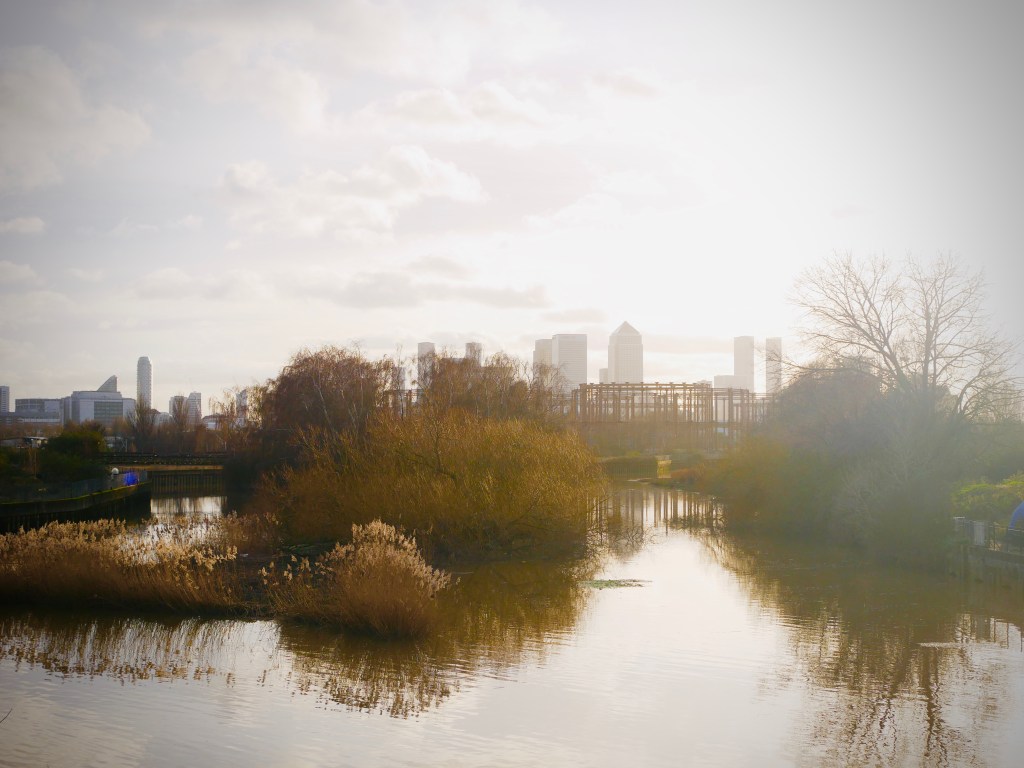
A view from the Greenway pedestrian/cycle route in East London, looking over the Channelsea Island with Canary Wharf in the distance. Reclaimed from its Chemical Works past, back into a true green oasis.
In polarising times, where polite debate has retreated to the side lines and extreme points of view appear to be the norm (at least where twitter is concerned), one of the few topics I feel which we can all agree on is this importance of green space. As a London resident living in a 1 bedroom flat with no private garden, I cannot stress enough the importance green space to my own health and wellbeing.
For 83% of the UK population who live in towns and cities, publicly accessible green space arguably holds even greater value when compared to our rural neighbours who have on average larger homes and better access to private outdoor space[1].
So why are green spaces so important? Well, it’s essential to note there are a heap of benefits outside the health and wellbeing considerations associated with green space albeit all these benefits are inter-related. In short form these include:
Climate Changebenefits – with green spaces allowing for a cooling effect into the surrounding urban areas (with green spaces on average 1 degree cooler than built up areas[2]) and the ability for trees and plants to absorb Carbon Dioxide in its soils;
Air Quality benefits – with plants and trees absorbing toxic particles and gases from the air reducing the amount of harmful gases in the air which damages our respiratory system;
Flood management– allowing vegetative surfaces to intercept and store water;
Wildlifebenefits – supporting habitats for a wide range of species; and
Economic uplift – providing local job opportunities, and encouraging investment into and area as a result of accessible greens space.
However, what I want to discuss today are the health and wellbeing benefits of green space which, at the time of writing during the third UK national lockdown, feels more necessary than ever before.
So what does the science say about the influence green space has on our wellbeing?
Studies have shown there are direct correlations between spending time in green space and the positive impacts on lowering stress levels; as evidenced in a fantastic paper named Landscape and Urban Planning[3] which measures the diurnal pattern of salivary cortisol as an objective indicator of stress.
Other measurable impacts from spending time in green space can be seen in a separate study which sought to measure psychophysiological stress recovery by taking repeated measures of ambulatory blood pressure, emotion, and the attention span of a number of young adults[4]. It concluded that:
Sitting in a room with tree views promoted ‘a rapid decline in diastolic blood pressure’ compared with sitting in a ‘viewless room’;
Taking time out to walk in green space ‘fostered blood pressure change that indicated greater stress reduction than afforded by walking in the urban surroundings’; and
Taking time out to walk in green space had a ‘positive impact of improved attention performance’ (something I’m sure all employers would be interested to hear!).
Studies also show that access to green space encourages physical activity, with people living in the greenest areas of England more likely to achieve the recommended amounts of physical activity than those that do not[5]. And that feels right, because I know from my own experience that the environment around me plays a huge influence on my behaviour.
From a social aspect green space also affords the ability to socialise, relax and create bonds with our friends and neighbours increasing stronger community relations[6]. This is instrumental in combating issues such as loneliness, something all generations suffer from but is particularly prevalent with the elderly.
To me all of this comes as no surprise. I’m sure we have all felt the reinvigorating rush of positive energy that comes from engaging in green space, be it a lunchtime walk or a morning run. I know that my local park has been a great place to catch up with a friends over the last year, one of the few bits of normality we have access to at this current time. However I feel that I can get such a positive engagement is because of the availability of parks in my local area.
Dusk in Highbury Fields, North London
But is access to green space really that good in our towns and cities?
A report carried out by Friends of the Earth, who analysed data from the Office of National Statistics (ONS) sought to measure and rate access to green space on a scale of A (the best) to E (deprived). It measured both the quantity of green space including gardens, public green space and open access land, and measured the distance via postcodes to access this land, using Natural England guidance that everybody should be within 5 minutes’ walk of 2 hectares of green space.
It found that roughly 1 in 5 of UK residents are deprived of green space[7]. This equates to nearly 10 million people, and includes only those people within an E rating as being the most deprived.
Further findings published by Friends of the Earth also show that:
Black and brown people are twice as likely to live in a neighbourhood with minimal access to green space;
Almost 40% of people from BAME backgrounds live in the most green-space deprived areas, compared to just 14% of white people;
The average amount of public green space for people in the most deprived green space neighbourhoods is less than 9 meter square, or the average size of a garden shed; and
Children from the most deprived areas are 20% less likely to spend time outside than those in affluent areas.
The lack of access to green space is even more shocking when held in context of a statistic published by Public Health England which states that ‘physical inactivity is responsible for one in six UK deaths’, which is equal to the number of people who die of smoking each year[8]. This again shows that BAME people and those from the most deprived areas of our country are the ones which suffer most from a lack of access to green space. Not so surprising really, and again lifts the lid on yet another ugly truth in our unequal society.
What makes these figures even more frustrating is that we know that where green space is made available, the socioeconomic position of the local population does not affect how frequently it is used[9]. In fact where accessible green space is provided, studies show this can help reduce socioeconomic health inequalities[10]. Furthermore Public Health England recognise the economic cost of physical inactivity estimated at £7.4 billion annually and costing the NHS £0.9bn alone annually.
So what can we do to change this?
A review published in 2020 by Public Health England, named ‘Improving access to greenspace’, has sought to highlight policy and mechanisms which Local Authorities are able to implement.
It considers:
Planning Policy and the prioritisation of green space as strategic policy and spatial planning in Local Plans;
Supporting meaningful local engagement to understand the benefits of green space (including valuing green space, now there’s a debate!); and
Supporting local research to highlight the impact of accessible green space with comparable case studies.
Personally I think this misses the bigger picture. Yes, these are all purposeful and meaningful steps however as with all strategic change you need to tackle it from top to bottom. So with that in mind, what are the UK Government doing to address this problem?
Let’s first look at the cash problem. The current total parks budgets across the UK is estimated by the Parks Charter to be around £1bn due to years of funding cuts to local public services[11]. But to just maintain the existing parks to appropriate levels it is estimated UK parks need a total budget of around £2bn – £3bn a year, so almost three times what is currently being spent to maintain them.
This stance doesn’t look like its changing much, even with the Government’s war of words using the sound bites such as the ‘green industrial revolution’ and the ambition to reach net zero emissions by 2050. When push came to shove in the 2020 Spending Review last autumn, there was no proper action to the lip service being paid towards climate change and the environment as a whole, let alone public access to green space.
They did confirm that:
‘£7m is being provided to improve public access to green space by taking forward the Coast to Coast National Trail and England Coastal Path’ and ‘more than £75 million in funding for National Parks and Areas of Outstanding Natural Beauty’[12].
But none of this concerns urban green space. I absolutely want to see investment in these nationally important spaces, but why do our towns and cities fail to attract the funds? Where is the investment into existing parks and the creation of new green infrastructure?
So in terms of what can be done, for starters let’s invest properly in providing access to green space.
A recent report commissioned by the National Trust says that that ‘the government should invest £5.5 billion of capital funding over 5 years to boost public access to green spaces, especially in areas lacking proper provision, together with £275 million in annual maintenance.’ To do this I would make public green space (such as parks) a properly funded statutory service, giving Local Authorities the support they require. In turn this relatively small investment (in the scale of the wider Spending Review) would deliver £200 billion in physical health and wellbeing benefits to the most deprived areas and, in tandem, promote active travel, bio diversity, carbon capture, and air quality enhancements.
I also believe we need to ensure public green spaces are protected, but where my views may differ from the various green groups is that we review this not solely at a Local Level but also at a Regional Level to ensure that a sustainable supply of housing is delivered alongside a protection of green space for current and future residents (including a thorough review of the Green Belt policy – god forbid!). To aid this, another idea I really love (promoted by Friends of the Earth) is that where green space is lacking, there needs to be a provision to provide newly accessible green infrastructure which could include creating street parks and opening up private common green space in new developments (which could in turn reduce the private service charges paid by residents).
If this has interested you, I’d encourage you to investigate the green initiatives in your local area. To influence any change, it’s my belief that civic action is the accelerator to change. There may be existing local projects in place to get involved with. An example of this in my local authority which was been awarded a £667k grant as part of the Future Parks Accelerator (FPA), with access to national health experts to aid the re-imagining our parks and green spaces. And if they aren’t doing enough, let them and your local MP know about it!
Lets start this post with a beautiful photograph of a Georgian showpiece – the Royal Crescent in Bath. One of the things I love most about this crescent is how the encroaching green landscape blends into the buildings. My favourite type of design is one that embraces the natural environment. Whilst the front façade is uniform and symmetrical, the back hides a multitude of sins, including differing roof heights and designs. How many planning metaphors can you get out of that?
What is planning? The dreaded first topic… a classic open ended question which sounds simplistic at first, but can take an eternity to explain.
Now I stress that this is visual-led blog for everyone interested in the built and natural environment which make up the Shapes + Place we live in. So apologies for the (what some may find) obvious first topic. However planning is such a fundamental part of how our urban and rural landscape is formed, and therefore a necessary starting place.
As this is a blog for everyone (planning background or not), let’s level the playing field and start with the Collins English Dictionary definition of planning. And that is:
“The process of deciding in detail how to do something before you actually start to do it.”
And that makes sense right? Before you start constructing a building there should be some sort of process to follow?
Now I promise you I’m not going to go down the well-trodden path about the detailed history of planning in England (I don’t think my planning colleagues would think much of it either). I should also state that yes, planning dates back as far as the third millennium BC and isn’t some completely new 20th Century construct. But I want to keep it short, so here is a quick account of how the English planning system has come to be.
(To be read in a semi academic voice… planners shut your eyes)
Prior to an act of parliament in 1947, the planning system in England was widely seen as weak and fragmented. Many people were living in poor housing conditions and the Government had limited control over urban sprawl. The 1947 Act sought to address this imbalance, and bring with it greater levels of regulation over development acting in the public interest. It brought with it Government control over land use within England, allowing for the large-scale post war rebuilding and devolved power to deny new development. A subsequent act in 1990 introduced further changes, principally dividing the system into forward planning and development control. It is these two main acts which set out the principle structure of our current planning system.
Short history chat – DONE!
So, we can now see there is a legislative framework which seeks to put a control on development (supported by further legislation I must add), but it still doesn’t tell us what planning is. Thankfully there is a handy little guide available on the UK Governments website called a ‘Plain English Guide to the Planning System’ which provides a useful explanation. It states:
“Planning ensures that the right development happens in the right place at the right time, benefitting communities and the economy.
It plays a critical role in identifying what development is needed and where, what areas need to be protected or enhanced and in assessing whether proposed development is suitable.”
And to be fair to them that is a pretty neat definition. So it says the English planning system checks whether what we want to build is right? Does it benefit the community and the economy? Is this development needed and does it compromise protected areas? All very important issues, and reasons why we should care about planning.
One key omission from this statement is that is does not mention environmental goals, which is rather surprising. The National Planning Policy Framework (NPPF – the current national framework which sets out the strategic policy principles and objectives) does refer to environmental objectives in its golden thread of ‘Sustainable Development’. So it seems odd that environmental objectives are not included within the main definition in the Governments guide. Sounds like a topic that we will be coming back round to at a later date…
But does the definition feel tangible to the everyday person?
Perhaps not, because if it did then maybe more people would take part in planning. There are two opportunities that we as citizens in England can get involved in planning; ensuring accountability and oversight. One is at the creation of a local plan and the other at the consultation and final consent of a planning application. I’m sure we are all aware of the latter, for example when my neighbour tried to pursue a monstrosity of an extension (a very real example). However the former is less well known.
The local plan making stage sets out the vision and strategic policies of our local authorities, putting forward the facts (such as flooding and population growth) alongside the aspirations (such as environmental goals, community focus and economic growth). And it’s this process which we need to all take ownership of and engage in more. The local plan reflects issues of local importance, aligning with both the National policy set out in the NPPF but also allowing for local interpretation. This was further localised by a 2011 act of parliament which introduced neighbourhood development plans, written and produced by a neighbourhood forums or parish councils which sets out the ultra-local vision (as I like to think of it) for your community.
Now I’m not going to start discussing the rights and wrongs of this localised system. Far better qualified people could do that. However what I want demonstrate is that this is a system in which we can all contribute to, so let’s do it.
I fundamentally believe we all have a shared responsibility to influence how our built and natural environment should take shape, both from at a strategic local policy level and in our day to day actions. This system, despite its flaws, is best means we have as a society to influence that process. The next time your local authority starts a review of the local plan, think about how it will impact your community. Think about contacting your local councillor of your ambitions and concerns, and make productive suggestions which represent the vision you have for your place.
So as I take you on a visual tour of the great and good developments in this country (and trust me we will do both) think about how we as individuals can better influence the shape it takes.





 Shapes + Place